Learning, Logic, and Teamwork with Matatalab in Y1
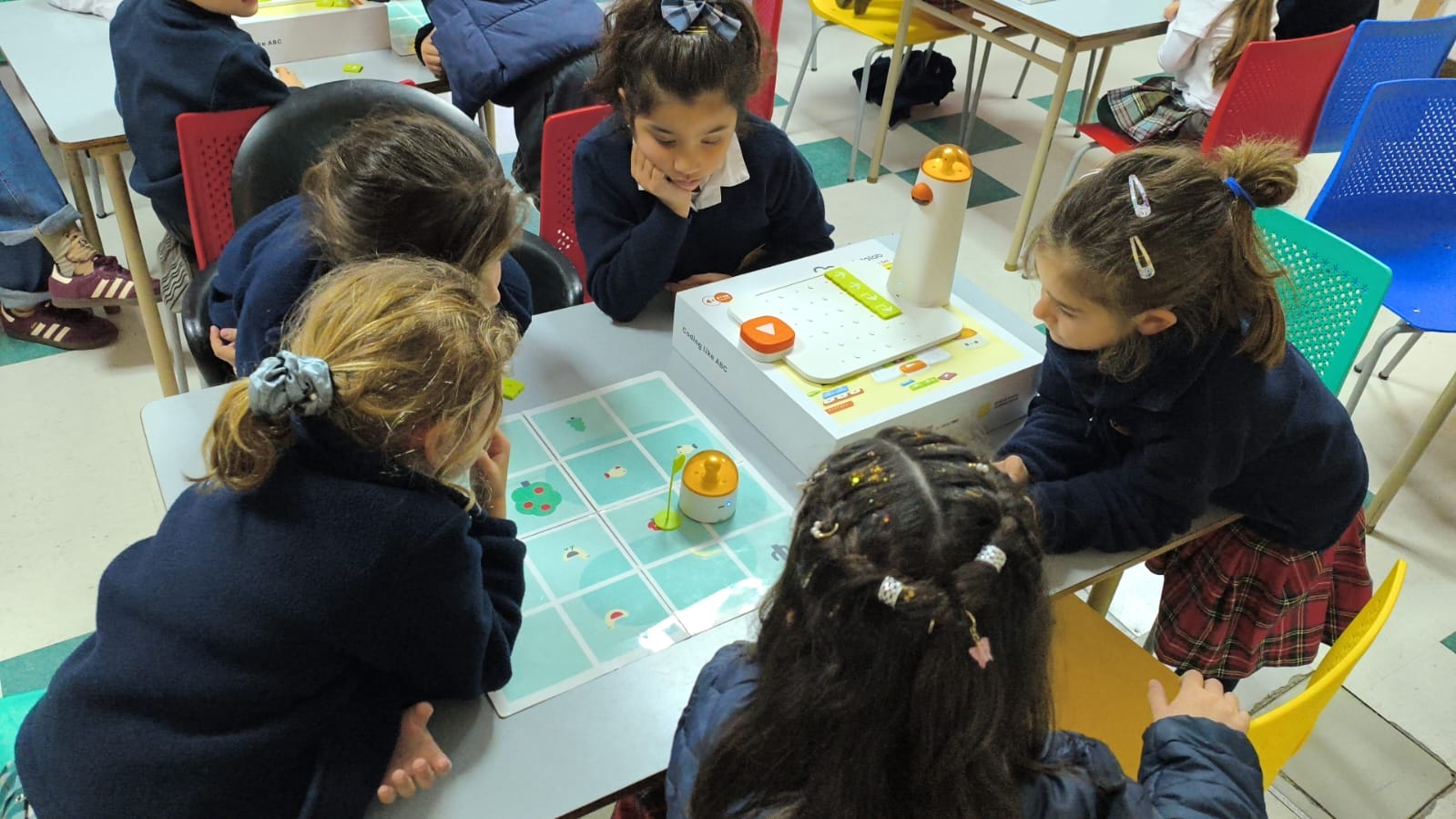
In Year 1, Design and Technology classes are filled with curiosity, logic, and plenty of smiles. Students have begun their introductory journey into robotics and computational thinking using Matatalab, a tangible and interactive tool designed for young learners to learn coding through play.
Without the need for screens, students design and implement sequences of instructions (algorithms) to guide their small robot through various challenges and mazes on the mat.
Beyond concepts of direction, logical order, and problem-solving, this experience is an invaluable opportunity to develop essential school skills:
Collaborative work and inclusion: Learning to listen to others’ ideas and build the best route for the robot together.
Communication: Expressing which steps the robot should take and agreeing on how to fix errors as a team.
Leadership and organization: Assigning roles within the group so that everyone actively participates in building the sequence.
Seeing students dialogue, test, make mistakes, and try again with enthusiasm shows us that computational thinking is, above all, a tool for creative and shared thinking.
En Year 1 las clases de Diseño y Tecnología se llenan de curiosidad, lógica y muchas sonrisas. Los alumnos han comenzado su recorrido de introducción a la robótica y al pensamiento computacional a través de Matatalab, una herramienta tangible e interactiva diseñada para que los más chicos aprendan a programar jugando.
Sin necesidad de pantallas, los estudiantes diseñan e implementan secuencias de instrucciones (algoritmos) para guiar a su pequeño robot a través de diversos desafíos y laberintos sobre el tapete.
Más allá de los conceptos de dirección, orden lógico y resolución de problemas, esta experiencia es una oportunidad invaluable para desarrollar habilidades fundamentales de la vida escolar:
Trabajo colaborativo e inclusión: Aprender a escuchar las ideas de otros y construir juntos la mejor ruta para el robot.
Comunicación: Expresar qué pasos debe dar el robot y acordar cómo corregir los errores en equipo.
Liderazgo y organización: Asignar roles dentro del grupo para que todos participen activamente en la construcción de la secuencia.
Ver a los alumnos dialogar, ensayar, equivocarse y volver a intentar con entusiasmo nos demuestra que el pensamiento computacional es, ante todo, una herramienta para pensar de manera creativa y compartida.